

A private security guard working at the Jefferson Park CTA Terminal, 4917 N. Milwaukee Ave., reportedly returned fire after a group of three people started harassing him and then fired read story
Chicago Explores Alternative Revenue Streams as Budget Debate Continues
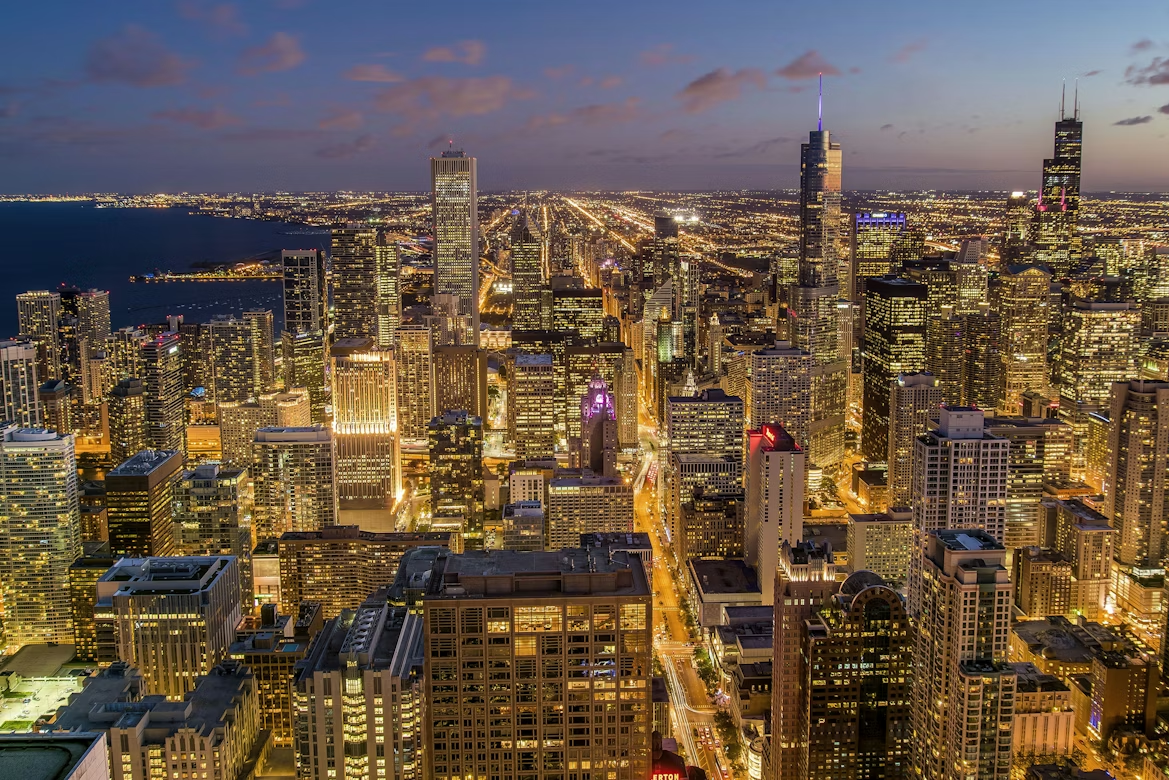

City Hall remains locked in a budget standoff that shows no signs of a quick resolution. Mayor Brandon Johnson wants one funding approach while a group of alderpersons pushes an entirely different plan. Chicago’s 2026 spending blueprint sits at the center of intense negotiations, with both sides presenting contrasting visions for closing a substantial funding gap. Johnson advocates for a monthly head tax targeting the city’s largest employers. A coalition of alderpersons opposes that strategy, and they have instead assembled an alternative featuring smaller fee increases plus unconventional revenue generators. The Committee on Finance approved the alternative proposal 22 to 13 after 4 hours of debate, and time is running short for reaching an agreement.
The alternative budget takes a scattered approach to revenue generation. Alderpersons eliminated the controversial head tax Johnson championed. They replaced it with dozens of smaller adjustments spread across multiple city services. The plastic bag tax jumps from 10 cents to 15 cents per bag. Rideshare fees increase along with liquor sales taxes. These adjustments add up slowly but collectively generate meaningful revenue without placing the entire burden on large employers. The coalition argues its approach distributes financial responsibility more evenly across the population. Each small increase touches different segments of the city’s economy.
Restaurant and bar owners face potential changes under the alternative plan. Video gaming in dining establishments would become newly permitted. The proposal estimates that this generates about 6.8 million dollars in fresh revenue. Many businesses already operate gaming in other Illinois municipalities. Bringing that same framework to Chicago restaurants creates a level playing field.
People who enjoy digital gaming alongside dining, for example, have explored recommended casino app options when traditional venues aren’t accessible. These platforms offer features like welcome bonuses up to several thousand dollars and secure payment processing with crypto and card options, giving diners a preview of what restaurant gaming could look like locally. Similar revenue diversification strategies appear in convention centers that now host food trucks and pop-up retail alongside traditional conference activities. Sports venues have added standing-room-only bars with live entertainment. The key involves creating multiple income streams without fundamentally altering a business’s primary purpose.
Chicago’s physical infrastructure becomes advertising space under this budget framework. Light poles throughout the city could display commercial messaging. Bridge houses and city vehicles join the list of potential ad locations. This portion of the alternative plan generates the most revenue at over 29 million dollars. The proposal marks a new approach to filling budget gaps. Alderpersons backing the plan believe it generates substantial funds while keeping direct costs off everyday residents.
The mayor’s head tax proposal targets companies with 500 or more employees. Each worker would trigger a $33 monthly charge for their employer. Johnson frames this as asking the most financially capable entities to contribute their fair share. The tax would primarily affect large corporations and major institutions rather than small businesses. Critics argue it could push companies to relocate operations outside city limits. Johnson maintains his version ensures working residents avoid bearing the brunt of budget shortfalls. The fundamental disagreement centers on who should carry the financial load.
One contentious element disappeared from the alternative budget before the vote. An earlier version included garbage collection fee increases. Alderperson David Moore from the seventeenth ward thanked colleagues for removing that provision while noting continued disagreement with the bag tax increase. Garbage fees touch every household regardless of income level. The alternative plan still leans on various small increases but avoids the most universally unpopular options. Matt O’Shea from the nineteenth ward emphasized the hundreds of hours invested in developing this alternative. The collaborative process contrasts with the mayor’s approach, which some council members view as top-down.
Johnson expressed serious reservations about the alternative plan immediately following the finance committee vote. He labeled it ‘the Secret Budget’ and criticized increased debt collection provisions. The mayor argues this contradicts claims about protecting working people. His statement questioned whether selling off Chicagoans’ debts could actually generate projected revenue. Johnson warned the proposal might create mid-year shortfalls requiring deep service cuts. His administration plans to spend several days reviewing every detail before deciding the next steps. The mayor hasn’t committed to vetoing a budget without the head tax but suggested his decision depends on final provisions.
Chicago needs an approved budget soon or face a potential government shutdown. At least 26 of 50 alderpersons must vote yes, along with mayoral approval. The alternative plan cleared the committee but needs full council support. Johnson could veto, forcing a supermajority override attempt. The mayor publicly committed to avoiding a shutdown by any means necessary. City services depend on approved funding. Residents need a functioning government regardless of which revenue approach ultimately prevails.
The budget standoff highlights competing philosophies about fair taxation. Chicago faces a choice between concentrating revenue generation on its wealthiest entities or distributing the burden across many smaller sources. Alternative revenue streams like infrastructure, advertising, and video gaming represent creative thinking. The plastic bag tax increase targets environmental goals alongside revenue needs. Every choice involves tradeoffs between revenue potential and public acceptance. Chicago watches as its leaders navigate these difficult waters with the deadline approaching fast.
Photo by Pedro Lastra on Unsplash
 No Pop-Ups
Weekly Digital Edition
Read every story. Skip every pop-up.
Get the full weekly edition delivered to your inbox — no interruptions, no waiting. Just local news the way it was meant to be read.
Only $19.50/year — less than 38¢ a week
Subscribe Now
This is just part of today’s coverage. Get the full story - every article, every ad, every page. Subscribe now.
The Latest From Our Community
A man was stabbed in his hand at about 4:50 a.m. Monday, Aug. 10, on a CTA Blue Line train near the Harlem station, 5550 N. Harlem Ave., after a read story
by BRIAN NADIG 45th Ward Democratic Committeeperson Michael Rabbitt and his Dems 45 organization have endorsed Jefferson Park resident S Gronkiewicz-Doran in the ward’s aldermanic race, which will be held read story
by BRIAN NADIG A new business, possibly a daycare, is in the works for the former CVS Pharmacy at the southeast corner of Milwaukee and Lawrence avenues. The pharmacy closed read story
by BRIAN NADIG A possible suspect is in custody after gunfire was reported at or near the Jefferson Park CTA Terminal, 4917 N. Milwaukee Ave., at about 5:20 a.m. Saturday, read story
by BRIAN NADIG A luxury hotel and spa for cats is planned for a vacant one-story office building at 5510 W. Montrose Ave. in the Jefferson-Portage Park area. Local resident read story
Browse by Category


 No Pop-Ups
Weekly Digital Edition
Read every story.
Skip every pop-up.
No pop-up ads — ever. Just stories, the way they were meant to be read
Full weekly edition delivered to your inbox every week — no waiting, no missing issues
Support local journalism and help keep our community connected
Only $19.50/year
That's less than 38¢ a week
Purchase Digital Subscription
Paypal
$19.50
/year
You can submit your payment via Paypal with a Credit Card. You DO NOT NEED TO HAVE A PAYPAL ACCOUNT.. Just click the “Paypal Subscribe” button below to iniate your secure payment! You will be directed to a Secure Paypal page in which you can pay with a Paypal account if you have one, or you can select "Pay with Debit or Credit Cardt" option below and process your payment via credit card.
Venmo
$19.50
/year
You can submit payment of $19.50 for a 1 year subscription to Nadig Newspapers' Venmo account using this link. Please include the email address in the comment/note section that you would like the digital subscription sent to.